

 Resources


 Trending Articles


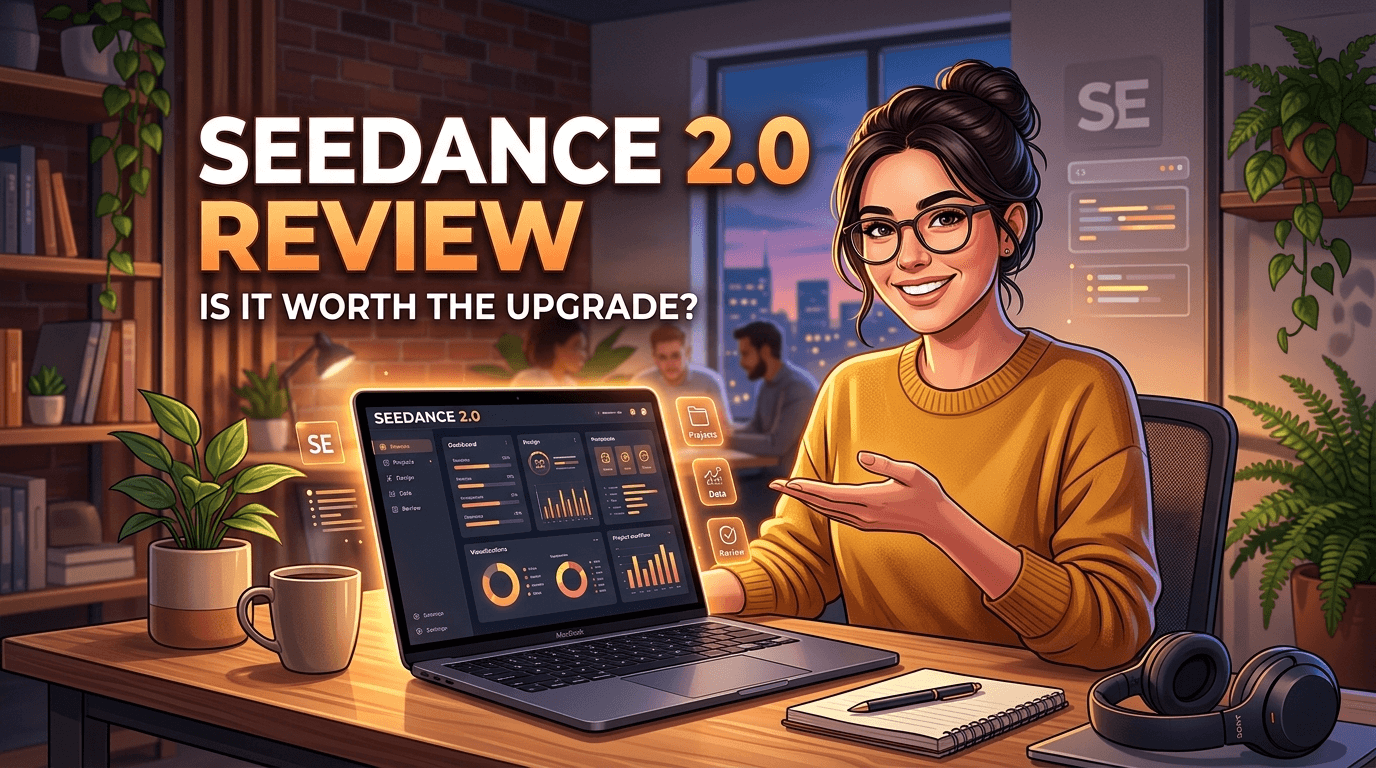
Seedance 2.0 has been generating serious buzz lately, and honestly, the hype makes sense. Every time you open X, you'll find countless posts showcasing the amazing videos people have created with Seedance 2.0. What sets it apart is how much it lowers the barrier to creating fluid, watchable video content—sometimes all you need is a rough concept and a character reference, and you're already halfway there. No endless prompt tweaking, no fighting with the model to understand what you actually want.
In this review, I'll walk you through how Seedance 2.0 stacks up against other major players—specifically Kling 3.0, Veo 3.1, and Sora 2. We'll cover its real strengths, where it falls short, and most importantly, whether it's the right tool for your creative work. I've also included hands-on test results so you can see exactly how these models compare when given identical prompts.

Want to Test Seedance 2.0 Without the Hassle?
You can access Seedance 2.0 directly through Novi AI—no regional restrictions, no waiting. New users get 180 free coins (80 on sign-up + 100 from Discord) to start creating immediately.

What Are Seedance 2.0's Real Strengths and Weaknesses?
Seedance 2.0's popularity stems from its ability to function as a "virtual production studio" rather than just a clip generator. By solving the two biggest hurdles in AI video—character consistency across multiple shots and natural audio-visual synchronization—it became the first tool that allowed indie creators to produce near-finished narrative content without a professional editing suite. This "director-level" control, turned it into a viral sensation that even caught the attention of major studios, such as Hollywood.
Seedance 1.0 vs. 1.5 Pro vs. 2.0
| Feature | Seedance 1.0 (June 2025) | Seedance 1.5 Pro (Dec 2025) | Seedance 2.0 (Feb 2026) |
|---|---|---|---|
| Primary Goal | Basic video generation | Visual quality & lip-sync | Narrative storytelling |
| Audio | Silent (post-process needed) | Synchronized/Lip-sync | Native Audio-Video (Simultaneous) |
| Scene Count | Single-shot only | Limited/Stitched | Multi-shot/Continuous |
| Max Length | ~8–12 seconds | ~8–12 seconds | 15–16 seconds |
| Control | Text/Image prompts | Minimal references | Omni-Reference (up to 10 inputs) |
| Resolution | Standard 720p | High quality 720p | 2K Output (1080p supported) |
Strengths of Seedance 2.0
Exceptional Character Animation Cohesion
This is where Seedance 2.0 really shines. When I tested continuous character actions—walking, turning, raising an arm—the motion stayed smooth throughout a full 15-second take. No stuttering, no weird geometry clipping, no limbs suddenly detaching from the body.
The difference becomes obvious when you compare it to other models, which often glitch out during longer sequences. If your project depends on fluid character movement, Seedance 2.0 handles it without the frustrating visual hiccups that plague most competitors.
Precise Camera Control
Camera movements—push-ins, pull-outs, pans, orbital shots—execute exactly as instructed. The camera stays stable, follows the intended trajectory, and doesn't randomly drift or shake.
This might sound basic, but most AI video models struggle here. I've lost count of how many times other tools have given me erratic camera behavior or sudden, jarring cuts. Seedance 2.0 follows professional cinematography logic much more closely, which makes a huge difference when you're building a sequence that needs to feel intentional.
More Realistic Physics Simulation
Fabric sways naturally in the wind. Hair flows dynamically with movement. Water splashes without clipping through surfaces. These small details matter, and Seedance 2.0 gets them right more often than not.
Competing models frequently deliver stiff fabrics, hair that clips through shoulders, or water that behaves like jelly. Seedance 2.0's physics feel grounded in reality, which helps sell the illusion—especially for more realistic or semi-realistic styles.
High Consistency Across Multiple Shots
When I generated a sequence of 3 to 5 consecutive shots, the character's appearance, the scene's color palette, and the lighting stayed consistent throughout. No sudden "face-swapping," no jarring color shifts, no lighting that changes for no reason.
This makes Seedance 2.0 incredibly valuable for storyboarding or creating sequences for short-form content. If you've ever struggled with maintaining visual continuity across multiple AI-generated clips, you'll appreciate how much cleaner this process feels with Seedance 2.0.
High-Precision Native Audio-Visual Synchronization
Lip-sync accuracy ranges from 92% to 99.8%, with audio and visuals aligned to the millisecond. This is genuinely impressive—most other models require tedious manual alignment in post-production.
With Seedance 2.0, you can skip the audio-visual calibration steps almost entirely. For dialogue-heavy content or lip-synced animation, this feature alone saves hours of editing work.
Weaknesses of Seedance 2.0
Relatively Long Generation Times
Generating a 10-second video can sometimes take 5 to 10 minutes. If you're used to lightweight competitors that churn out results in 8 to 12 seconds, this wait time feels sluggish.
For rapid output or batch-generating multiple scenes, Seedance 2.0's efficiency isn't ideal. It's a trade-off: you get higher quality, but you sacrifice speed.
Limited Facial Control Without Reference Images
When generating content without a reference image, facial expressions tend to feel somewhat monotonous. Occasionally, the generated face bears an uncanny resemblance to existing film or TV characters—which can be distracting if you're aiming for originality.
With a reference image, Seedance 2.0 performs much more reliably. But if you're working purely from text prompts, facial controllability is noticeably limited.
Prone to Visual Artifacts During High-Speed Motion
Running, rapid combat, extreme-angle rotations—these scenarios occasionally result in limb stretching, minor clipping errors, or inter-frame ghosting. Seedance 2.0 handles low-to-medium speed actions beautifully, but its tolerance for high-speed dynamics is lower than models specifically optimized for fast motion.
If your project involves intense action sequences, expect to do some manual cleanup or frame-by-frame fixes.
Subject to Regional Access Restrictions
Direct access isn't available in certain regions, which means you may need a compliant network environment (like a VPN) to use it. Products without regional restrictions obviously offer a lower barrier to entry.
For cross-regional users, this can feel like an unnecessary friction point—especially when other tools are immediately accessible without workarounds.
Defined Ceilings on Detail and Scene Complexity
Scenes featuring three or more characters simultaneously often result in chaotic movements. Finger details occasionally appear distorted. And the maximum duration for a single generated clip is capped at 15 seconds.
For scenarios involving multi-character interactions, extended video sequences, or intricate hand movements, you'll still need to patch and stitch clips manually. It's not a dealbreaker, but it does limit the scope of what you can accomplish in a single generation.
Seedance 2.0 vs. Veo 3.1 vs. Kling 3.0 vs. Sora 2
For this comparison, I used the exact same prompt across all four models and focused on three things that matter most in real projects: character consistency, animation quality, and how much post-production work I'd need to do afterward. After creating the character image, here is what I found:
The Prompt:
- An alien kitten gently touched down on a Japanese street in a tiny flying saucer. Curiosity leading the way, it approached a vending machine and beheld strawberry milk for the very first time. With a gentle tap of its tiny paw, a can of milk tumbled out; the kitten happily embraced it and took a tentative lick. Its eyes instantly sparkled with delight, and as its tail wagged, it scattered a trail of shimmering stardust. Sitting contentedly beneath a cherry blossom tree, the little visitor savored its very first taste of sweetness on Earth.
1Seedance 2.0: Best for Consistent Characters and Minimal Editing
Try It OnlineSeedance 2.0 handled the character exactly the way I wish every model would. The kitten stayed perfectly consistent from the first frame to the last, and the entire video flowed smoothly without any jarring glitches or awkward transitions.
What really stood out was how little editing I needed to do afterward. Most of the visual focus stayed on the kitten's changing facial expressions, which were vivid and expressive enough to carry the whole scene on their own.
If you care about character consistency and want something that's "ready to use" with minimal tweaking, Seedance 2.0 genuinely delivers.
| Metric | Rating | Notes |
|---|---|---|
| Character Consistency | ⭐⭐⭐⭐⭐ (10/10) | Perfect match throughout |
| Animation Smoothness | ⭐⭐⭐⭐⭐ (9/10) | Flawless flow, vivid expressions |
| Post-Production Needed | ⭐⭐⭐⭐⭐ (Low) | Minimal editing required |
| Overall for Stories | ⭐⭐⭐⭐⭐ (9/10) | Top choice for fidelity and speed |
2Veo 3.1: Decent Details, Weaker on Character Fidelity
Veo 3.1 landed somewhere in the middle. It didn't fully follow my original "alien kitten" design, although the fur color, texture, and overall temperament were reasonably close.
The problem was more about style and fidelity: the realistic-style animation never quite matched the character I had in mind. It's not that the result was unusable, but if you're picky about sticking to a specific character look, you'd probably find yourself re-generating or patching things in post-production.
| Metric | Rating | Notes |
|---|---|---|
| Character Consistency | ⭐⭐⭐ (6/10) | Fur/texture close, but design off |
| Animation Smoothness | ⭐⭐⭐⭐ (7/10) | Decent but not ideal for realism |
| Post-Production Needed | ⭐⭐⭐ (Medium) | Some re-gen or fixes needed |
| Overall for Stories | ⭐⭐⭐ (6/10) | Okay for basics, not precision |
3Kling 3.0: Strong Cinematic Look and Movement
Kling 3.0 actually surprised me in a good way. It maintained the character design with solid visual consistency, and both the character's actions and the camera movements felt smooth and intentional.
The Japanese-style architectural background was a highlight—it had a very cinematic feel, with composition and atmosphere that looked more polished than I expected. Compared to Seedance 2.0, Kling's overall visual presentation felt more "cinema-grade."
If you're chasing a sophisticated, movie-like aesthetic, Kling 3.0 is definitely worth a serious look.
| Metric | Rating | Notes |
|---|---|---|
| Character Consistency | ⭐⭐⭐⭐⭐ (9/10) | Solid visual match |
| Animation Smoothness | ⭐⭐⭐⭐⭐ (9/10) | Fluid motion and transitions |
| Post-Production Needed | ⭐⭐⭐⭐ (Low) | Polished out of the box |
| Overall for Stories | ⭐⭐⭐⭐⭐ (9/10) | Best for cinematic vibes |
4Sora 2: Lively Animation, But a Different Character
 Note
Note
Important Update: OpenAI has shut down its Sora video generation platform as of March 2026, making it no longer available for testing or use.
Sora 2 delivered lively, energetic animation. The kitten's movements, mannerisms, and expressions were full of personality and genuinely fun to watch.
The catch? It didn't preserve the original character design at all. The actual kitten model looked completely different from what I started with. So while the motion and behavior were appealing, it wasn't the same "alien kitten" anymore.
If your priority is expressive, dynamic animation and you're flexible on character design, you might like the result. But if your project depends on a specific, consistent character, this run would be a miss.
| Metric | Rating | Notes |
|---|---|---|
| Character Consistency | ⭐⭐ (4/10) | Completely different model |
| Animation Smoothness | ⭐⭐⭐⭐⭐ (9/10) | Lively and expressive |
| Post-Production Needed | ⭐⭐⭐ (Medium) | Redesign work required |
| Overall for Stories | ⭐⭐⭐⭐ (7/10) | Great motion, poor fidelity |
5Quick Comparison of Pricing and Queue Time
Tired of Juggling Multiple Subscriptions?
Novi AI gives you access to Seedance, Kling, Veo, and Sora—all in one platform. Test different models side-by-side without managing multiple accounts or subscriptions.
| Model | Unit Price (est. per sec) | Monthly Pricing Plan (Entry to Pro) | Acquisition Difficulty | Average Queue Time |
|---|---|---|---|---|
| Seedance 2.0 | ~$0.14 | $9.60 (Basic) to $84 (Advanced) | Low (Available via Dreamina) | 1–2 minutes (Paid) |
| Kling 3.0 | ~$0.08 – $0.10 | $10 (Standard) to $180 (Ultra) | Low (Web/App with daily free credits) | 3–15 minutes |
| Sora 2 | ~$0.10 – $0.50 | $20 (Plus) to $200 (Pro) | Moderate (Plus/Pro users only) | 1.5–3 minutes |
| Veo 3.1 | ~$0.10 – $0.75 | $19.99 (Pro) to $249.99 (Ultra) | Moderate (via Google AI/Vertex) | < 1.5 minutes |
Who Should Use Seedance 2.0?
After testing Seedance 2.0 extensively, here's my take: it's best suited for creators who prioritize character consistency and polished, near-final output over raw speed. If you're building narrative content—short-form dramas, storyboards, character-driven animations—Seedance 2.0 excels at maintaining visual continuity and delivering results that require minimal post-production cleanup. It's also ideal if you're working with dialogue-heavy scenes, thanks to its exceptional audio-visual sync. However, if your workflow depends on rapid iteration, batch-generating dozens of variations, or creating high-speed action sequences, you'll likely find the longer generation times and occasional high-speed artifacts frustrating. Similarly, if you need multi-character scenes or extended clips beyond 15 seconds, you'll still be doing manual stitching work. In short: choose Seedance 2.0 if quality and consistency matter more than speed, and if your projects fit comfortably within its technical sweet spot.
How to Access and Use Seedance 2.0
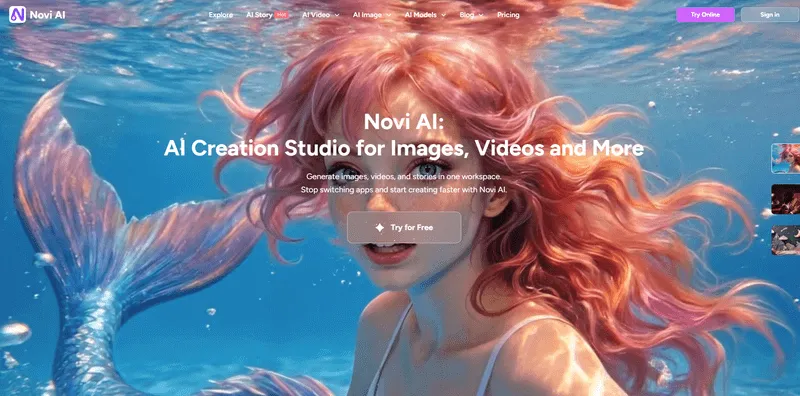
While Seedance 2.0 may have regional restrictions through official channels, there's a straightforward way to get started without the hassle: Novi AI.
Why Choose Novi AI?
We're a trusted platform with an established track record in AI video generation. What sets us apart is real customer support—if you run into issues or have questions, you can connect directly with the Novi AI team through our active Discord community. No automated responses, no waiting days for help. Just real people who understand the tools and can actually solve your problems.
Step 1Sign Up and Claim Your Free Credits
Create your Novi AI account and you'll immediately receive 80 free coins to start experimenting. Want more? Join our Discord server and claim an additional 100 coins—that's 180 coins total to test Seedance 2.0 and other models without spending a cent.
Step 2Create Your First Video
Head to the explore page and click "Create Video." Select Seedance 2.0 from the model options, input your prompt (and reference image if you have one), and let the model work its magic. While you're there, feel free to explore our other features and browse the AI Tools Catalog page for more creative possibilities and use cases.

Step 3Download and Share

Once your video is ready, download it directly from your dashboard. Share your creations on Instagram, X (Twitter), or wherever your audience hangs out. The more you experiment with Novi AI, the better you'll understand what each model excels at—and how to get the results you actually want.
The learning curve is minimal, and with the free credits, you can test different prompts and styles risk-free. If you hit any roadblocks, remember: our Discord community is there to help.
Try It OnlineFAQs About Seedance 2.0
1Is Seedance 2.0 better than Kling 3.0 or Sora 2?
It depends on what you're optimizing for. Seedance 2.0 beats both in character consistency and minimal editing requirements. Kling 3.0 edges ahead for cinematic visuals and atmospheric composition. Sora 2 wins on expressive, dynamic motion—but loses badly on character fidelity. There's no universal "best," only best for your specific use case.
2How much does Seedance 2.0 actually cost?
Pricing varies depending on access method. Through official ByteDance platforms, it operates on a credit-based system where each generation consumes credits based on video length and resolution. Third-party integrations like Novi AI may offer different pricing structures or bundled credits. Check current rates on your chosen platform, as costs can fluctuate.
3Can Seedance 2.0 handle realistic human faces?
With a reference image, yes—quite well. Without one, facial features tend to be generic and occasionally resemble existing characters from film or TV. If realistic human faces are critical to your project, always provide a reference image for better control.
4What's the biggest limitation of Seedance 2.0?
The 15-second maximum clip length and struggles with multi-character scenes are the most restrictive limitations. If your project requires longer sequences or complex group interactions, you'll need to manually stitch clips or simplify your scenes.
5Does Seedance 2.0 work well for fast action scenes?
Not really. High-speed motion—running, rapid combat, extreme rotations—often results in limb stretching, clipping, or ghosting artifacts. It handles medium-paced action fine, but for intense, fast-paced sequences, other models specialized in motion may perform better.
Conclusion
Seedance 2.0 isn't perfect, but it excels where it matters most for narrative creators: character consistency, smooth animation, and minimal post-production cleanup. The longer generation times and occasional high-speed artifacts are real trade-offs, but for projects where quality and visual continuity outweigh raw speed, it's hard to beat.
If you're building character-driven stories, storyboards, or dialogue-heavy content, Seedance 2.0 is genuinely one of the strongest options available right now. Just make sure your workflow can accommodate its technical constraints—and if it can, you'll likely find it becomes one of your most reliable tools.
For a step-by-step guide on getting started with Seedance 2.0, check out our complete Seedance 2.0 beginner tutorial.
Was this page helpful?

Article by
Aaron Smith