


 Resources


 Trending Articles

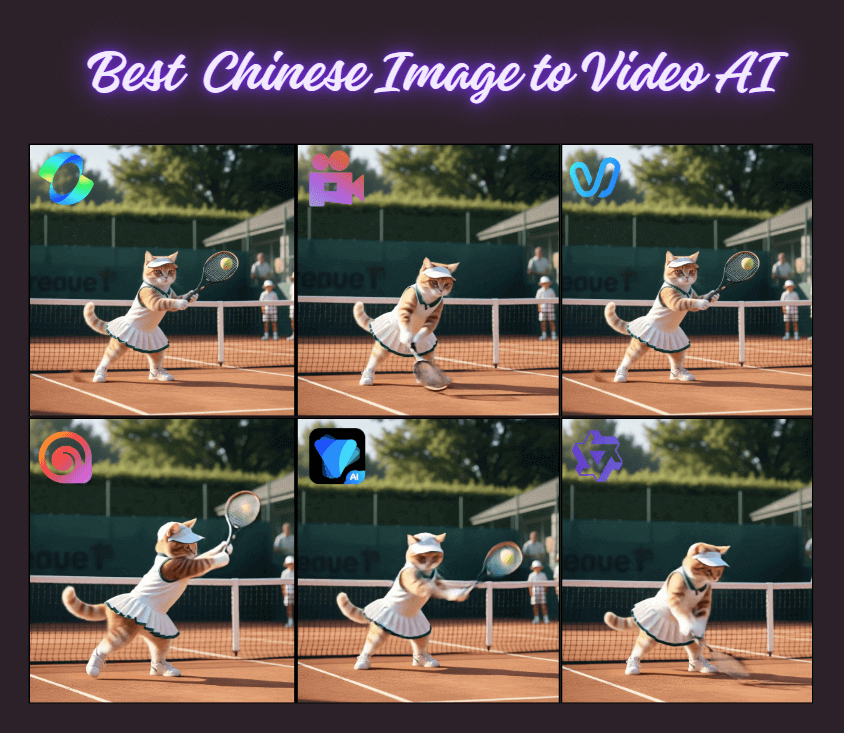
If you frequently use image-to-video apps or AI models, you're likely familiar with various platforms such as Sora, Veo 3, Kling, and Hailuo AI. However, you might not have noticed that several leading AI generators are developed by Chinese teams. If you want to understand the best Chinese image-to-video AI generators and how to use them, this article is for you.
We focus not only on the differentiated innovations and practical commercial value of Chinese teams, but also on providing a user-friendly guide and practical creative case studies for you.

Ready to Try These Chinese Video Generators?
Novi AI provides step-by-step guides, video cases and optimized prompts for Kling, Hailuo AI, and other Chinese models. Explore real examples across storytelling, animation, and social media content to see what's possible.

Why Chinese Image to Video AIs Are Popular?
The reason Chinese Image to Video AIs are widely searched, followed, and used is their ability to meet specific needs with significant advantages. They not only rival OpenAI products in key performance aspects such as video length and high-definition resolution, but also offer highly competitive cost-effectiveness, with generation costs as low as 4 cents per second—far lower than the pricing of Sora, Runway, and others. This significantly reduces the barrier to entry for creators.
Additionally, Chinese models tend to be more flexible. For example, while Sora doesn't widely offer real-person reference generation and has strict portrait rights restrictions, some Chinese open-source models adapt to global creation scenarios, and allow no filter AI video creation, and support 119 languages. This enables individual creators and enterprises to complete video production efficiently, attracting widespread attention from users worldwide.
Best Chinese Image to Video AI
If you're choosing a Chinese image-to-video generator in 2026, prioritize three things: visual fidelity under motion (skin, fabric, lighting), shot-level control (lenses, camera moves, cuts), and your throughput-cost curve (how fast you get reliable clips at a price you can sustain).
Below we compare 6 leading models—what they're best for, why they're fast or slow, how they handle faces and typography, and where you'll hit limits—so you can match the right engine to your workflow and budget.
1Seedance 2.0

Seedance 2.0 is ByteDance's "Seed" research team's next‑generation AI video generator, built for cinematic storytelling, social media, and professional content creation, delivering ultra‑smooth image‑to‑video and text‑to‑video generation in up to 2K resolution with precise lip‑sync and fully synchronized native audio. Its enhanced native audio system produces studio‑grade background music, sound effects, and dual‑channel audio, while vertical screen output is further optimized for TikTok, Reels, and YouTube Shorts with algorithm‑friendly dynamics. Trusted by creators, marketers, and professional studios, it turns static images and text into polished, engaging videos with full commercial usage rights, stable character preservation, and seamless editing and extending capabilities, making it the ideal choice for professional projects, brand campaigns, and high‑impact visual content.
 Features:
- Beat-matching and hook-optimized framing for TikTok/Douyin
- Face handling tuned for social aesthetics
- Team libraries, presets, and fast variant iteration
- Workflow designed for high-volume campaign testing
 Pros
Pros
- Highest probability of post-ready clips with minimal edits
- Excellent for rapid A/B testing and scaling
- Metrics-aware defaults (timing, cropping, rhythm)
 Cons
Cons
- Guardrails limit extreme or niche aesthetics
- Potential ecosystem lock-in; fewer deep controls
Best for: Social Media Skits & Dramas / Product Demos / Educational Content
2Kling 3.0

Kling 3.0 is definitely the best all-round Chinese image-to-video AI for most users, officially released on February 5, 2026, and fully available globally on March 5. It delivers cinematic 1080p quality (upgradable to native 4K HDR), ultra-smooth 60fps motion, and exceptional prompt accuracy with the revolutionary AI Director Engine, which automatically generates multi-shot sequences with perfect scene transitions and pacing—no manual editing required. The new Omni Native Audio system ensures seamless synchronization of dialogue, sound effects, and environmental audio with lip-sync support for multiple languages and dialects.
Compared to Kling 2.5 Turbo, it offers 50% longer video duration (up to 15 seconds), significantly improved character consistency through subject binding technology, and a 20x faster draft mode for quick iterationskling3.io. This model is a game-changer for individual creators, marketers, YouTubers, and small businesses. It enables scalable production of ads, explainer videos, and storytelling content with studio-grade quality and commercial usage rights.
Though Kling has also launched the advanced Omni and Pro editions, they are more expensive and better suited for professional film studios. Therefore, I highly recommend Kling 3.0 Standard Edition as the best Kling model currently for most users. It offers the latest technology, fast response times, significantly reduced costs, and excellent overall performance—perfect for both beginners and experienced creators alike.
Features:
- Stable portrait/image-to-video with natural micro-expressions
- Smooth pan/tilt/dolly and usable slow motion with low jitter
- Strong vertical (9:16) defaults, auto-beat pacing, soundbed suggestions
- Quick drafts; predictable results across similar prompts
Pros
- Very fast throughput; low redo rate
- Consistent faces, hair, and fabric under motion
- Social-first framing that "just works"
Cons
- Limited granular lens/lighting control
- Narrative multi-shot stitching can feel templated
- Closed ecosystem; fewer advanced knobs
Best for: Brand Advertising / Film/TV Previsualization (Previs) / Long-form Video Production
3PixVerse V5.5

PixVerse V5.5 is an improvement over V5, that redefines generative media with its new Audio-Visual Sync Engine and Multi-Shot Architecture. It now generates crystal-clear 1080p clips in seconds, offering extended durations of up to 10 seconds per generation. The updated model significantly improves temporal coherence, virtually eliminating "drift" to keep characters and environments consistent across longer cuts. Its breakthrough multi-modal capabilities now include native audio generation—syncing dialogue, sound effects, and background music directly to the visuals. With the introduction of multi-clip generation, it can produce narrative-driven sequences with dynamic camera transitions in a single pass. Affordable and versatile, PixVerse V5.5 empowers creators, agencies, and filmmakers to produce complete, sound-synced viral shorts and storytelling content with unprecedented speed.
Features:
- Native Audio Generation: Auto-generates synchronized SFX, dialogue, and music matching the visual context.
- Multi-Clip & Shot Control: Generates dynamic cuts and camera transitions (wide to close-up) in one request.
- Extended Duration: Supports high-fidelity clips up to 10 seconds with consistent physics.
- Smart Prompt Optimization: "Thinking Type" parameter automatically enhances vague prompts for better fidelity.
Pros
- Exceptional character and scene consistency across multi-shot sequences
- Native sound integration removes the need for external post-production
- Drastically reduced "shimmer" and artifacting in complex movements
- Ultra-fast inference allows for rapid iteration of HD content
Cons
- Dialogue lip-sync precision can vary on complex scripts
- Requires detailed descriptive prompting to fully leverage the multi-shot capabilities
- Needs prompt finesse for strict realism
Best for: E-commerce Flash Ads / Narrative Storytelling / Music Videos / Viral Shorts with Sound
4Wan 2.6

If you follow the LLM space, you've likely heard of Qwen. It's Alibaba's flagship foundation model—similar to GPT-4 or Llama—designed for text generation and multimodal understanding (like analyzing images and audio).
But Alibaba also has a counterpart called Wan. While Qwen handles the 'brain' work of language and understanding, Wan is the 'creative eye', focusing purely on visual generation. Think of Wan as their answer to Sora: it specializes in video creation, editing, and transforming text or images into video. Together, Qwen and Wan form a complete ecosystem covering both intelligence and creation.
Wan 2.6 raises the bar for cinematic multi-modal video generation with enhanced synchronized audio, exceptional visual fidelity, and expanded creative control. It produces 5 to 15-second 1080p videos (supporting multiple aspect ratios including 16:9, 9:16, 1:1, 4:3 and 3:4) with dynamic multi-shot transitions, refined atmospheric effects, and improved audio-video synchronization—including natural lip-sync for character dialogue.
Its upgraded advanced prompt understanding not only handles complex instructions with greater precision but also supports multi-shot narrative control, making it ideal for product showcases, architectural walkthroughs, creative prototyping, short-form marketing content, and even cinematic pre-visualization. Additionally, it introduces reference-to-video generation for subject consistency, retains image editing capabilities and bilingual prompts (Chinese/English), and adds new features like role-playing and audio-driven generation, making it more accessible and versatile for global users. This model further demonstrates Alibaba's cutting-edge AI capabilities, seamlessly bridging technological innovation with practical applications for both business and creative projects.
Features:
- Explicit shot/lens/lighting parameters; consistent framing on demand
- Clear Chinese/English text within the scene with low shimmer
- Research/enterprise trajectory and ecosystem support
- Image conditioning plus detailed camera directives
Pros
- Best path to "describe it, get it" for cinematography
- Strong signage/UI rendering for product and OOH scenes
- Suits labs and enterprise integrations
Cons
- Preview artifacts and evolving quotas/UI
- Requires prompt engineering to hit top quality
Best for: Film Previsualization (Previs) / E-commerce 3D Showcases / Enterprise Creative Prototypes
5Hailuo 2.3

Hailuo 2.3 specializes in stylized image-to-video content, excelling in anime, ink wash, and game CG styles with remarkable consistency. Its enhanced physical simulation brings complex movements—like dance and martial arts—to life with realistic fluidity. Additionally, it captures human microexpressions and emotional transitions, making it ideal for character-driven narratives. With cost-effective pricing that lowers bulk production costs by 50%, it's perfect for artists, marketers, and creators looking to bring their illustrations, ads, or personal projects to life in a highly artistic yet affordable way.
Features:
- Intuitive interface, including access via web, mobile apps, and open API
- Natural blinks and expressions; strong identity retention
- Aspect ratio presets and soundtrack suggestions
- Camera cues that work out of the box
- Minimal setup for social-ready clips
Pros
- Quick to "good enough" quality
- Great for talking-heads and portrait-led promos
- Low friction for non-experts
Cons
- Limited granular lens/lighting adjustments
- In-scene complex typography can shimmer
Best for: Animation Production / Game CG & Cinematics / Martial Arts & Dance Content
6Vidu Q2

Vidu Q2 transforms static images into emotionally resonant, film-like videos with nuanced storytelling and "AI acting." It captures microexpressions like trembling lips and thoughtful glances, while executing fluid camera moves and dynamic multi-character interactions—even in intense action scenes. Offering two modes—Turbo for fast 20-second 1080p videos and Pro for high-fidelity cinematic detail—it caters to both quick social media content and detailed creative projects. With sharp semantic understanding, it turns simple prompts into vivid, stable videos that captivate audiences with authentic emotion and visual impact.
Features:
- Director-like sequences with native cuts and lens persistence
- Good low-light handling, reflections, and volumetrics
- Robust cultural aesthetics (period pieces, traditional styles)
- Shot/camera directives for structured storytelling
Pros
- Most "film-like" continuity at this tier
- Reliable motion physics and scene carryover
- Great for teasers, narrative ads, research prototypes
Cons
- Higher credit consumption for multi-beat sequences
- Steeper learning curve for shot-level prompting
Best for: Short Video Platforms (TikTok/Reels) / Narrative Short Films / Emotional Ad Campaigns
7Quick Comparison
| Model | Developer | Access Levels | Cost Ratio ($/sec) | Speed | Resolution | Notes |
|---|---|---|---|---|---|---|
| Seedance 2.0 | Bytedance | Hard | 0.89 | 41.4 sec/5s | 2K | Capable of fast 2K generation. |
| Kling 3.0 | Kuaishou Technology | Medium | 0.056~0.14 | 2–5 min per generation | 1080P | Video 3.0 Omni supports durations up to 15s, multi-shot storyboarding, and native audio generation. |
| PixVerse V5.5 | Aishi Technology | Easy | 0.09~0.24 | 2 min/clip | 1080P | Offers multiple resolution options (360p to 1080p). |
| Wan2.6 | Alibaba | Hard | 0.1875 | 3–5 min/10s | 1080P | Open-source model from Alibaba. |
| Hailuo 2.3 | MiniMax | Easy | 0.117 | 3–5 min/clip | 1080P | Higher-priced unlimited and subscription plans are available. |
| Vidu Q2 | Shengshu Technology | Medium | 0.003 | In seconds | 1080P | Offers high-quality, complex motion and emotional expression. |
How to Use Chinese Image to Video AI?
Most Chinese image-to-video tools follow a simple three-step workflow: upload your source image, enter your text prompt (in English), and generate your video.
For creators working across multiple platforms or producing high volumes of content, managing several browser tabs can slow you down. That's where integration solutions become valuable. Tools like Novi AI bring multiple AI video models—including Kling, Pixverse, Vidu, and Veo—into a single online environment, letting you test different engines without switching contexts. You can even apply Life Like Realistic Veo 3 Prompts to compare high-end Western outputs against these Chinese alternatives.
A great video requires more than just a great clip. You need to research ideas, write compelling scripts, and maybe even translate content for a global audience. This is where Novi AI evolves from a simple video tool into your all-in-one creative partner.
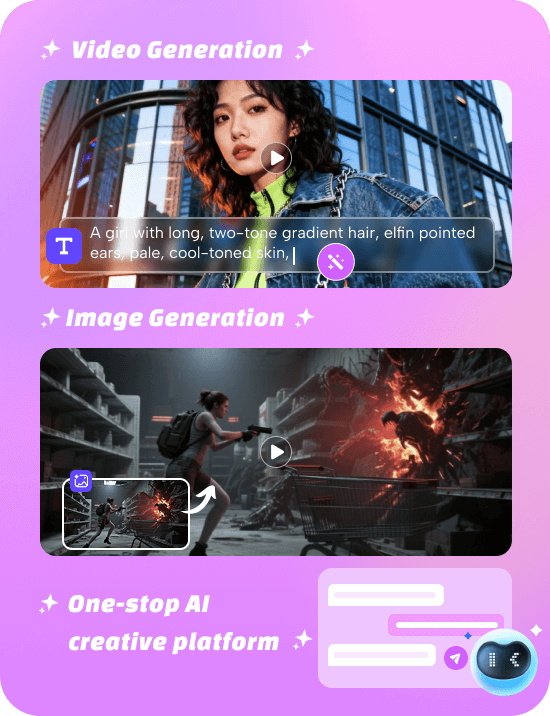
More Features from Novi AI
- One-Click Script-to-Long-Video: Turn your script into a multi-scene long-form video in one click—complete with subtitles and natural voiceover, ready to publish.
- Multi-Shot Storyboarding: Automatically split your script into structured shots with scene descriptions, pacing, and transitions—so your video stays coherent from start to finish.
- More Creation Support: Flexible image and video models designed for all-in-one generation—ready to use. Try Nano Banana prompts to create kids' photography directly on this platform.
 Trustpilot Rating 4.8
Popular Use Cases
Once you've chosen your model, here are three proven content strategies that creators are using to generate revenue and grow their audiences:
AI-generated fight videos: The use of advanced Chinese AI video generation tools (like Hailuo AI or Cling AI) to create short, dynamic, and often humorous video clips of characters or user-uploaded photos in martial arts or combat scenarios.
AI Pet Sitcoms: Pet owners upload photos of their cats or dogs and generate anthropomorphic videos—cats cooking breakfast, dogs running farms. These wholesome, shareable clips attract massive engagement on TikTok and Instagram, driving revenue through platform monetization programs.
Healing Meditation Videos: Creators upload landscape photos (beaches, forests, mountains) to generate 10-minute ambient videos paired with soothing music. These "sleep-aid white noise" or "stress-relief meditation" videos posted to YouTube can earn passive income through the YouTube Partner Program. Because viewers return to them repeatedly, a single meditation video can generate 10x the long-term revenue of a typical short-form clip.
FAQs
1Do I need to know Chinese to use Chinese image-to-video tools?
No. All mainstream Chinese AI video tools support English prompts and offer English interface options. The workflow is identical to other image-to-video platforms you may have used: upload image → enter prompt → generate video. Device requirements are minimal—most tools run in your browser without special hardware.
2Is Chinese image-to-video AI worth paying for?
Chinese image-to-video tools typically offer competitive pricing, making them ideal for experimentation. If you're producing content regularly, paid tiers unlock faster generation speeds and higher resolution outputs. If platform-hopping becomes tedious aggregators like Novi AI let you trial multiple models from one place before committing to a subscription.
3Which Chinese AI tool generates "ultra-realistic" video?
Kling 3.0 is the current leader for ultra-realism. It features a native 4K cinematic workflow, enhanced motion physics that follow real-world laws, and lifelike character expressions. It supports extended 15-second takes with natural camera movement and ambient sound.
4What is the best Chinese Image-to-Video AI right now?
Seedance 2.0 (by ByteDance) is the strongest for production control, using a unique 12-file multimodal reference system for unmatched character and scene consistency. While Kling 3.0 is faster and better for high-energy motion, Seedance 2.0 provides a more stable, cinematic tone ideal for narrative storytelling.
5What are the best Chinese open-source AI models available now?
Several excellent Chinese open-source AI models now rival commercial alternatives. DeepSeek v3.2 is an outstanding all-purpose model that handles diverse tasks exceptionally well. For coding, Qwen 3 offers both general programming assistance and specialized terminal/command-line capabilities. For image generation, Qwen and SeedDream (available on GitHub) deliver high-quality results comparable to premium services. Wan provides powerful video generation capabilities that were previously only available through expensive proprietary platforms.
Conclusion
Chinese image-to-video AI has matured rapidly, offering professional-grade results at accessible price points. Whether you're creating social content, marketing materials, or film previsualization, the key is matching the right model to your specific needs—motion fidelity for character work, prompt accuracy for complex scenes, or cost efficiency for high-volume production. The tools are here; the only limit is your creativity.
Was this page helpful?

Article by
Aaron Smith


![Best Horror Animes to Watch[2026]: Top 20 Supernatural Picks](https://images.noviai.ai/noviaien/assets/article/video-tips/best-horror-anime.png)
![How to Make an AI Dog Podcast[2026]: Step by Step Guide with Novi AI](https://images.noviai.ai/noviaien/assets/article/video-tips/How_to_Make_An_AI_Dog_Podcast.webp)
![How to Make Animated Horror Stories: 2 Ways Introduced[2026 Guide]](https://images.noviai.ai/noviaien/assets/article/story-tips/animed_horror_stories.png)